Login
Login
Beyond the Prompt: Building Resilient Video Pipelines in a Multi-Model Era
The industry has reached a point of collective fatigue with the "magic button" demo. We have all seen the 10-second clips of hyper-realistic landscapes and cinematic close-ups that flood social media every time a new model drops. For a creative operations lead, these demos are often more frustrating than they are inspiring. They showcase potential without addressing the plumbing. The gap between generating a single "wow" asset and building a repeatable, brand-safe production pipeline is widening, and the bridge across that gap isn't built on better prompts—it is built on architectural resilience.
Building a pipeline that relies on a single generative model is a strategic error. Models drift, APIs change, and what worked in a beta environment often fails to scale when a client demands fifty variations of a 30-second spot. To move from experimentation to enterprise-grade output, we have to stop treating these tools as magic and start treating them as modular components in a much larger, often messy, creative stack.
The Fragility of the 'Magic Button' Approach
The current enthusiasm for prompt-to-video tools hides a significant amount of technical debt. When a team relies on "the right prompt" to get a result, they are essentially gambling on a black box. If you cannot reproduce a specific aesthetic or motion profile across multiple clips, you don't have a pipeline; you have a slot machine.
In a professional production environment, version control and seed consistency are paramount. Most "one-click" solutions fail here because they lack the granular controls required to maintain a character’s likeness or a brand’s color palette across different lighting conditions. This is where the "magic" breaks down. We often see teams spend hours trying to "brute force" a prompt to fix a minor visual glitch, rather than having the tools to isolate and edit that specific artifact.
The necessity of moving toward a system where assets are reliably reproduced—rather than luckily stumbled upon—is the next great hurdle for creative ops. This requires a shift in mindset from "how do I write a better prompt?" to "how do I structure my workflow so that the model is just one part of the assembly line?"
Benchmarking the Output: Tactical Choice Between Kling, Wan, and Seedance
Not all models are created equal, and pretending they are interchangeable is a recipe for missed deadlines. A benchmark-driven approach requires us to look at the specific strengths of the underlying architectures. Currently, the market is segmented by the type of motion and "texture" a model prefers.
For instance, Kling has gained a reputation for cinematic realism and high-fidelity skin textures, making it a go-to for lifestyle or fashion-oriented assets. However, Kling can sometimes be overly restrictive in its motion, prioritizing "stills that move slightly" over complex kinetic action. On the other hand, Seedance 2.0 often provides better technical flexibility when you need to handle more aggressive camera pans or character interactions. Then there is Wan 2.7, which sits in a middle ground, often offering a different interpretation of lighting that might suit a moodier, more atmospheric brand guide better than the others.
Understanding "model drift" is also critical. A prompt that yields a perfect result in January might produce different artifacts in June if the provider has updated the weights or the safety filters. This is why a multi-model strategy is essential. If one architecture begins to fail or change its output style, a resilient pipeline should be able to pivot to another without a total collapse of the creative direction. It is about selecting the tool based on motion complexity requirements, not just whatever is trending on Twitter.
The Friction of Iteration: What it Actually Takes to Edit Videos Online
The "edit" phase is usually where AI-native workflows fall apart. In traditional post-production, an editor has total control over every frame. In the generative world, the moment you need to change one detail—the color of a shirt, the speed of a hand gesture—you often have to re-generate the entire clip, losing the "soul" of the previous version.
The challenge of maintaining temporal consistency is the primary reason why professional teams are hesitant to fully commit. When you try to Edit Videos Online through standard web interfaces, you often face a trade-off between the speed of cloud-based processing and the granular control of local NLE (Non-Linear Editing) software.
We are seeing a rise in the importance of "in-painting" and "style transfer." Instead of asking the AI to build the whole scene, we are seeing better results by providing a base video and using AI to layer the aesthetic on top. This maintains the structural integrity of the motion while allowing the AI to handle the "paint." However, the truth is that we are still in the early days of this. The friction of moving assets between a generator and an editor remains a bottleneck that eats up time and budget.
Managing the Hallucination Gap in Commercial Assets
We must be honest about the current limitations. AI still suffers from what I call the "Physics Problem." It doesn't truly understand gravity, momentum, or human anatomy; it understands pixel probability. This leads to hallucinations that are unacceptable in a commercial context—fingers that meld into objects, hair that flows against the wind, or backgrounds that morph into liquid when a character walks past.
Automated filters are getting better, but they are not a replacement for a human eye. A machine might not realize that a brand's logo is slightly warped or that a character’s limb has a sub-perceptual stutter. This is where E-E-A-T (Experience, Expertise, Authoritativeness, and Trustworthiness) becomes vital. A Video Editor AI can generate the frames, but it cannot judge the brand safety of those frames.
Uncertainty Reset: There is a significant amount of uncertainty regarding long-form narrative coherence. At this stage, anyone claiming that AI can generate a consistent 5-minute narrative with a single prompt is overpromising. We simply don't have the temporal memory in current models to keep a character's facial structure identical over several minutes of varied action without heavy manual assembly. We are currently limited to "vignette-style" production—short, high-impact clips that are stitched together by human editors.
From Prompting to Directing: Integrating a Centralized AI Video Editor
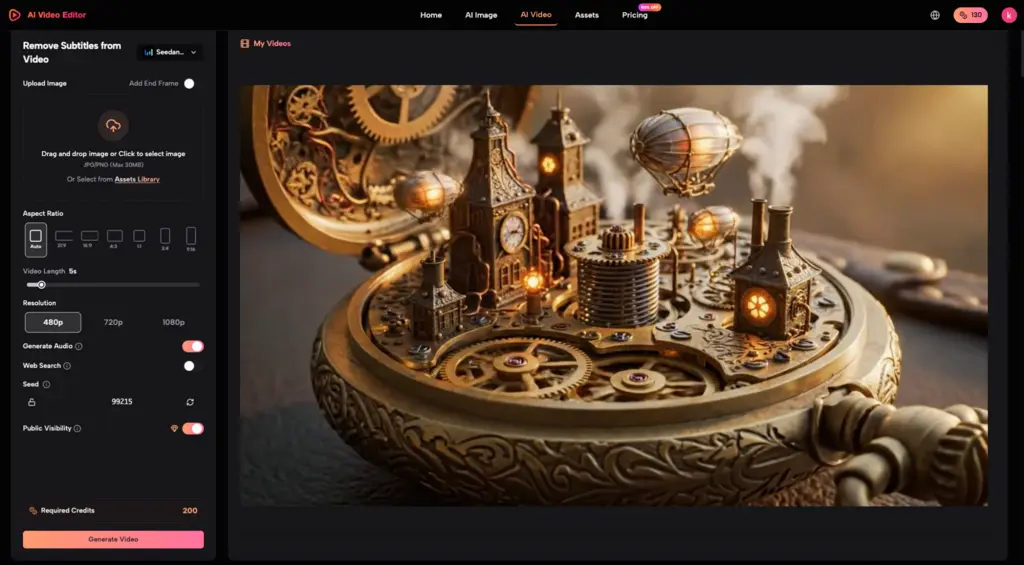
The role of the "Prompt Engineer" is already evolving into something more akin to a Creative Director or a Technical Director. In this new paradigm, a unified AI Video Editor serves as a necessary control plane. Instead of jumping between five different tabs for Kling, Wan, and Flux, operators need a centralized hub where they can manage disparate models under one roof.
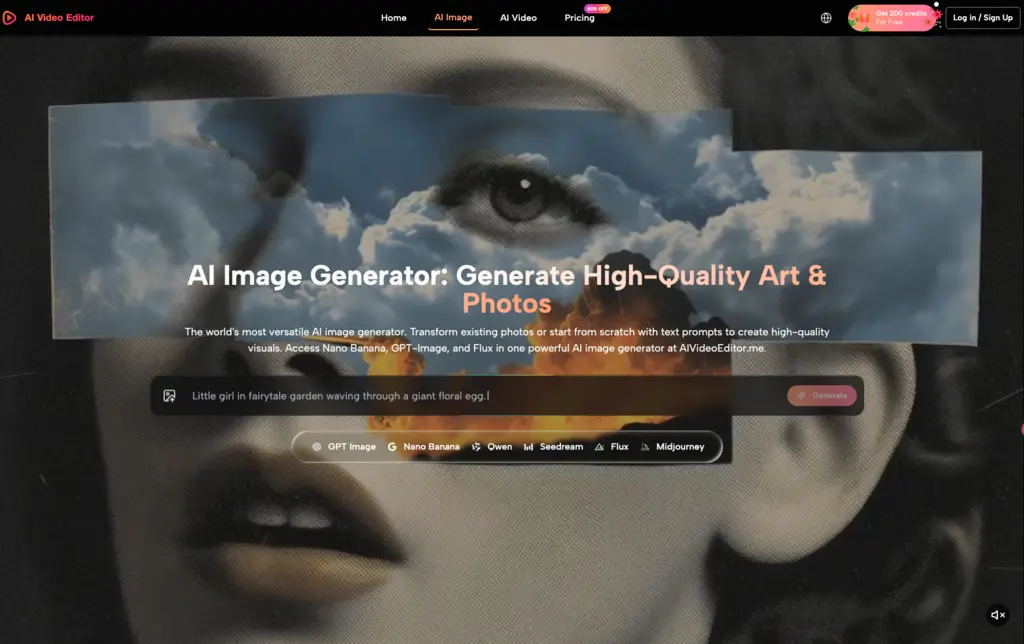
Using a platform like aivideoeditor.me allows a team to access a variety of models—from Seedance 2.0 for motion to Flux for high-fidelity base images—without the overhead of managing multiple subscriptions and API keys. It changes the workflow from "hunting for a tool" to "directing an output." For example, a creative ops lead might use the AI Image Generator to establish the visual "key art" using Google Nano or Midjourney, and then push that static asset into the AI Video Maker to bring it to life with Veo or HappyHorse.
This centralized approach also helps mitigate the "Physics Problem" mentioned earlier. By having access to multiple models, you can test which one handles a specific movement better. If Google Veo is struggling with a complex liquid simulation, you might find that Runway or Kling handles it with fewer artifacts.
Expectation Reset: Even with a centralized hub, the "final 10%" of any video project still requires traditional tools. Integrating AI-generated clips into software like Premiere Pro or Resolve is not an optional step for professional delivery; it is a requirement. AI provides the raw material, but the human editor provides the pacing, the sound design, and the final polish that makes a video feel intentional rather than accidental.
The future of video production isn't a world where the AI does everything. It is a world where the creative lead is a systems architect, building a pipeline that is robust enough to handle the quirks of generative models while remaining agile enough to pivot when the next "big thing" inevitably arrives. Success in this era isn't about finding the best model; it's about building the best system to manage them all.
Related Blogs
No related blogs found.